













For all Orders Over 40 BHD
Guarantee Within 7 Working Days
Within 7 working days of delivery
Contact us Anytime
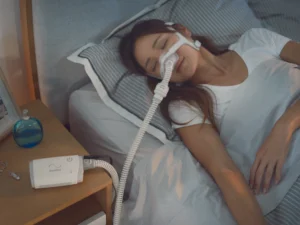
This setting is designed to make the beginning of therapy more comfortable by delivering a low start pressure to help patients fall asleep more easily. Once they’re sleeping, the sleep onset detection feature comfortably ramps up to the prescribed pressure.
EPR is a feature that reduces pressure during exhalation, making it easier for patients to breathe during therapy and helping them adjust to treatment. When EPR is enabled, delivered pressure will not drop below 4 cm H2O.
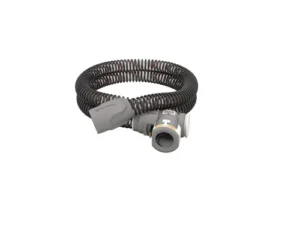
If your patient requires oxygen, they’ll need to use an oxygen port. ResMed recommends using the Oxygen Connector Port, but an Oxygen Side Port Connector may also be used. Note: An oxygen diverter valve can be set up to reduce build-up in case oxygen continues to flow when the device is off or on standby mode. If your patient is using the Standard or SlimLine™ air tubing, we recommend placing the oxygen port between the device and the air tubing. If they’re using the ClimateLineAir™ heated tubing, then the port will need to be fitted between the tubing and the mask.
Designed to make the beginning of therapy more comfortable by starting off with lower pressure, this feature lets you set a “ramp” time of 5 to 45 minutes before the device begins delivering the prescribed level. Note: In auto-adjusting devices like the AirSense™ 10 AutoSet™ or AirCurve™ 10 VAuto, end-of-ramp time is when the auto-adjusting algorithm starts monitoring and responding to the patient’s breathing patterns.
Don't have an account yet? Sign up
No items in your cart. Go on, fill it up with something you love!
Start Shopping Now